
Margaret Beaufort’s Waning Command
The Constant PrincessThis thread traces Margaret Beaufort’s lifelong defense of Tudor power and the eventual loss of influence to a new generation.
increasing Bearing strength in each event
 decreasing
Bearing strength in each eventdecreasingThe Dynasty’s Architect

A Mother’s Political Work
A contested claim
Margaret Beaufort helps prepare Henry Tudor’s return from exile and the campaign that brings him to the throne. Her political intelligence becomes foundational to Tudor rule.
Power secured
She regards the dynasty’s survival as a personal achievement. That experience makes her wary of anyone who might influence her descendants.
The Court’s Governor

Rules for the Heir
Control of routine
Margaret regulates court ceremony, Arthur’s education, and the couple’s scheduled visits. She sees discipline as necessary to protect the succession.
Catalina’s resistance
The Spanish princess recognizes the grandmother’s power but also resents the limits placed on her marriage. Their relationship begins in guarded competition.
An Adviser to Henry VII

Advantage Before Affection
A practical counselor
Margaret evaluates Catalina’s marriage prospects through succession, money, and political advantage. She distrusts sentiment as a basis for policy.
A new proposal
When Henry VII considers marrying Catalina himself, Margaret assesses the religious and dynastic obstacles. Her approval makes the proposal politically imaginable.
A Queen’s Funeral

The Matriarch Ascendant
A court without its queen
Elizabeth of York’s death leaves Margaret with still greater authority over ceremonial life. She uses the Royal Book to control the court’s public order.
A new generation approaches
Catalina and the young prince represent a future Margaret cannot fully command. Her authority remains formidable, but it is no longer uncontested.
The Last Command Refused
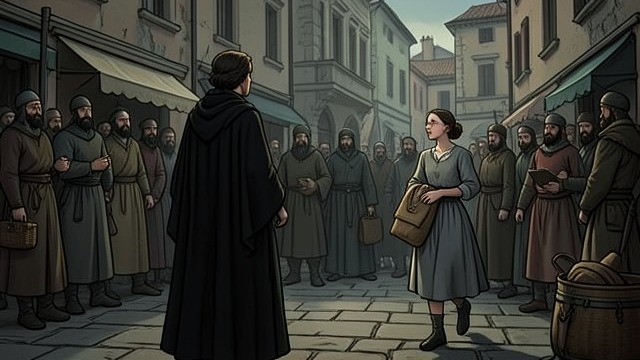
A Legacy Challenged
The demand
Dying, Margaret asks Katherine to keep Henry from war. She invokes duty as a final claim to authority.
Katherine’s answer
Katherine refuses the promise, declaring that it is now her turn to shape England. Margaret dies soon after, and Katherine organizes the funeral on her own terms.
Before 1485, during the Wars of the Roses
1501–1502, during the young couple’s first year
1502–1503, during the marriage negotiations
February 1503, after Elizabeth of York’s death
1511, during Margaret’s final illness
